

Introduction
A clean and hygienic office is essential for employee wellbeing, productivity, and creating a positive impression on clients and visitors. In today’s workplace, maintaining high standards of office hygiene is no longer optional—it’s a critical part of running a successful business.
Offices are shared environments where employees frequently interact with desks, keyboards, telephones, meeting rooms, kitchens, washrooms, and communal equipment. Without proper hygiene practices, germs, bacteria, and viruses can spread quickly, leading to increased sickness, reduced productivity, and a less pleasant working environment.
Whether you operate a small office or a large corporate workplace, these practical office hygiene tips will help you create a cleaner, healthier, and more productive workspace.
Why Office Hygiene Matters
Good office hygiene benefits both employees and businesses.
Maintaining a hygienic workplace helps:
Reduce employee sick days
Improve workplace wellbeing
Increase productivity
Enhance employee morale
Create positive impressions for visitors
Support health and safety standards
Promote a professional working environment
A clean office contributes directly to business success.
1. Regularly Clean and Disinfect High-Touch Surfaces
High-touch surfaces are among the biggest sources of bacteria and germs in an office.
Common examples include:
Door handles
Light switches
Keyboards
Computer mice
Telephones
Printer controls
Meeting room tables
Shared equipment
These surfaces should be disinfected regularly throughout the week.
Professional office cleaning services often prioritise high-touch areas as part of their workplace hygiene programmes.
2. Keep Workstations Clean and Organised
Employee desks can quickly accumulate dust, food crumbs, paperwork, and clutter.
Encourage staff to:
Wipe down desks regularly
Organise documents
Dispose of rubbish promptly
Keep personal items tidy
Clean keyboards and screens
A clean workstation promotes both hygiene and productivity.
Good office hygiene starts at individual desks.
3. Maintain Office Kitchens and Break Rooms
Office kitchens are often one of the busiest areas in the workplace.
Without proper cleaning, they can become breeding grounds for bacteria.
Best practices include:
Cleaning worktops daily
Sanitising tables
Washing dishes promptly
Emptying bins regularly
Cleaning microwaves and refrigerators
Disinfecting shared appliances
A hygienic kitchen contributes significantly to overall workplace cleanliness.
4. Ensure Washrooms Are Clean and Fully Stocked
Washrooms play a vital role in workplace hygiene.
Regular washroom cleaning should include:
Toilet sanitisation
Sink cleaning
Floor cleaning
Mirror polishing
Touchpoint disinfection
Businesses should also ensure washrooms remain stocked with:
Hand soap
Paper towels
Toilet paper
Hand sanitiser
Clean washrooms improve employee satisfaction and reinforce positive workplace standards.
5. Encourage Proper Hand Hygiene
Hand hygiene remains one of the most effective ways to reduce the spread of germs.
Encourage employees to:
Wash hands regularly
Use hand sanitiser when necessary
Wash hands before eating
Wash hands after using washrooms
Follow workplace hygiene guidelines
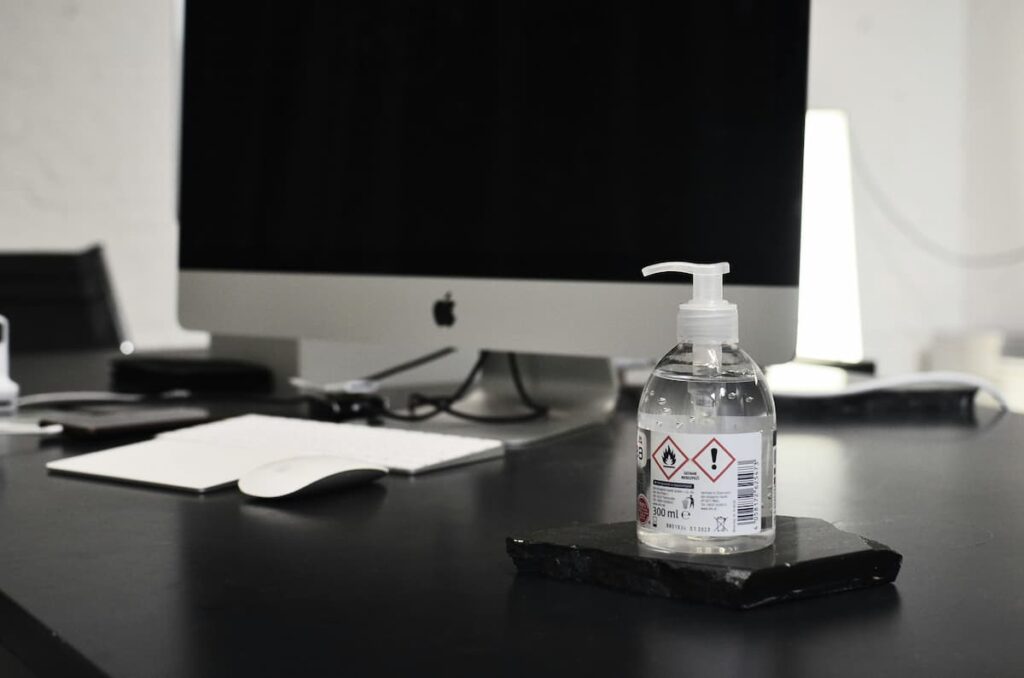
Providing accessible hand sanitiser stations throughout the office can support these habits.
6. Improve Indoor Air Quality
Air quality is an important but often overlooked aspect of office hygiene.
Poor indoor air quality can contribute to:
Allergies
Respiratory issues
Fatigue
Reduced productivity
Ways to improve office air quality include:
Regular dust removal
Carpet cleaning
Ventilation maintenance
Air filter replacement
Keeping windows open when possible
A clean and well-ventilated office supports employee health and comfort.
7. Empty Bins Frequently
Overflowing bins can quickly affect office cleanliness and hygiene.
Best practices include:
Daily bin emptying
Recycling where appropriate
Using bin liners
Cleaning bins regularly
Removing food waste promptly
Proper waste management helps prevent unpleasant odours and bacterial growth.
8. Schedule Professional Office Cleaning
Even with good employee habits, professional cleaning remains essential.
Professional office cleaning services provide:
Deep cleaning
Sanitisation
Carpet cleaning
Washroom cleaning
Dust removal
Floor maintenance
Businesses that invest in professional cleaning typically maintain higher standards of office hygiene and workplace cleanliness.
Regular professional cleaning also helps protect office assets and furnishings.
9. Implement a Clean Desk Policy
A clean desk policy encourages employees to maintain organised workspaces.
Benefits include:
Reduced clutter
Easier cleaning
Improved security
Better productivity
Enhanced workplace appearance
Employees should be encouraged to clear desks at the end of each working day.
This simple practice contributes significantly to overall office hygiene.
10. Perform Regular Deep Cleaning
Routine cleaning is important, but periodic deep cleaning is equally essential.
Deep cleaning helps remove hidden dirt, dust, and bacteria from areas that may not receive daily attention.
Common deep cleaning tasks include:
Carpet cleaning
Upholstery cleaning
High-level dusting
Vent cleaning
Detailed kitchen cleaning
Washroom deep sanitisation
Many businesses schedule professional deep cleaning every three to six months.
Common Office Hygiene Mistakes to Avoid
Many workplaces unintentionally overlook important hygiene practices.
Common mistakes include:
Neglecting shared equipment
Ignoring kitchen cleanliness
Infrequent washroom cleaning
Allowing bins to overflow
Skipping deep cleaning
Poor ventilation
Failing to sanitise high-touch surfaces
Addressing these issues can dramatically improve workplace hygiene.
The Benefits of Good Office Hygiene
Businesses that prioritise office hygiene often experience:
Reduced Employee Absenteeism
Cleaner workplaces help reduce the spread of illness.
Improved Productivity
Employees perform better in clean, organised environments.
Better Employee Morale
A well-maintained office demonstrates that employee wellbeing matters.
Positive Client Impressions
Visitors notice clean workplaces and associate them with professionalism.
Healthier Working Conditions
Good hygiene creates a safer and more comfortable environment for everyone.
Why Professional Cleaning Supports Office Hygiene
Professional cleaning companies have the expertise, equipment, and processes required to maintain high workplace hygiene standards.
Their services typically include:
Surface disinfection
Floor cleaning
Washroom sanitisation
Waste management
Kitchen cleaning
Deep cleaning programmes
For many businesses, professional cleaning is one of the most effective ways to maintain a consistently hygienic workplace.
Frequently Asked Questions
Why is office hygiene important?
Office hygiene helps reduce illness, improve productivity, support employee wellbeing, and maintain a professional workplace.
How often should offices be professionally cleaned?
Most offices benefit from professional cleaning several times per week, while larger workplaces may require daily cleaning.
What are the most important areas to clean?
High-touch surfaces, washrooms, kitchens, workstations, and shared equipment should receive priority attention.
Can office hygiene improve employee productivity?
Yes. Clean, organised workplaces help employees focus and perform more effectively.
Conclusion
Maintaining excellent office hygiene requires a combination of employee responsibility, regular cleaning practices, and professional cleaning support. By implementing these ten practical tips, businesses can create healthier, safer, and more productive working environments.
From sanitising high-touch surfaces and maintaining clean washrooms to improving air quality and scheduling professional cleaning services, every step contributes to a cleaner workplace.
A commitment to office hygiene not only protects employee wellbeing but also strengthens your company’s professional image and long-term success.